

Quick answer
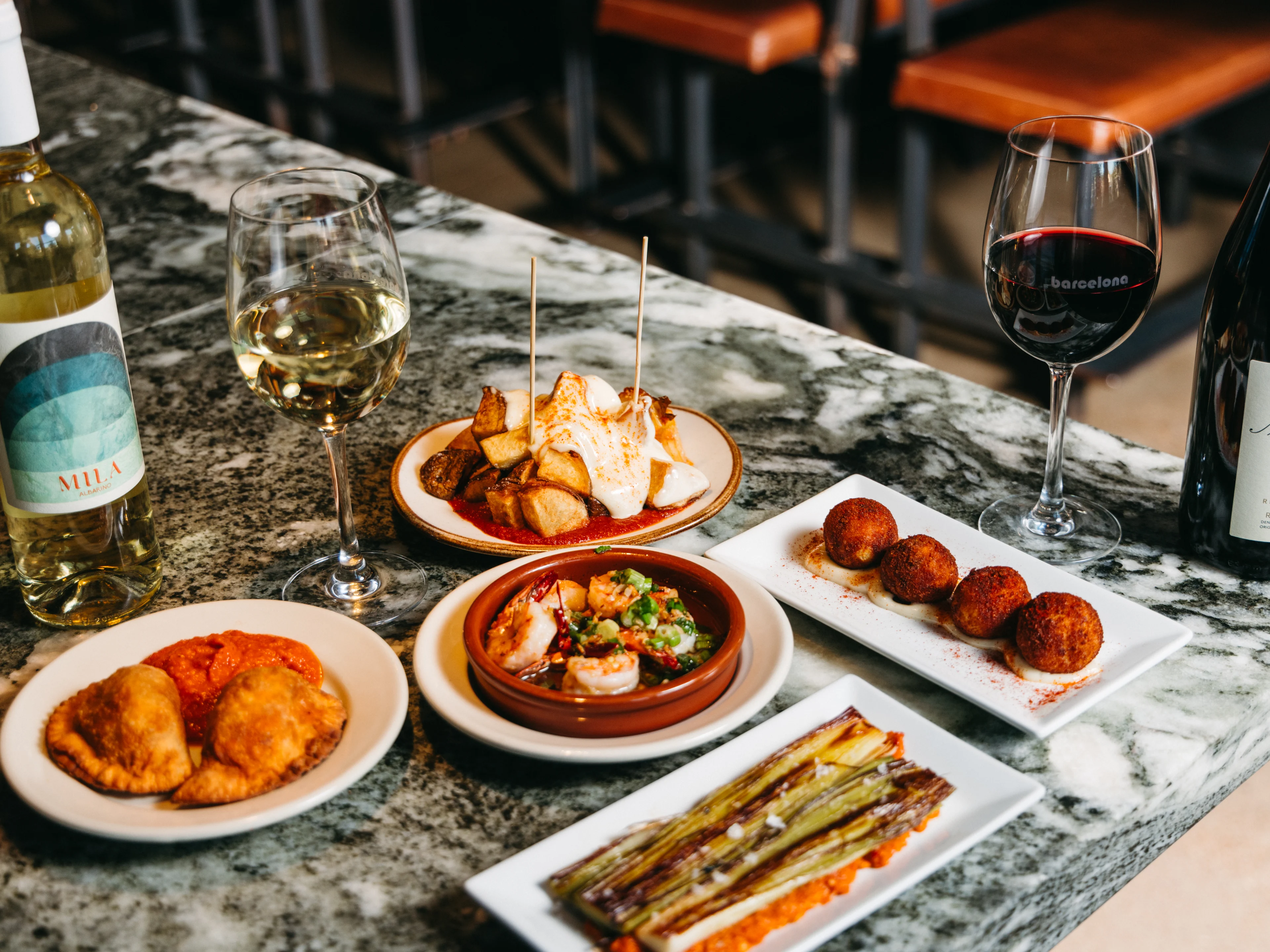
What wine goes with tapas depends on the dish: cava or Albariño work with seafood tapas like gambas and boquerones, tempranillo or Garnacha pair with cured meats and chorizo, and vermut de grifo is the Barcelona standard for olives and patatas bravas. Most tapas bars serve wines by the glass or copa, letting you match each plate without committing to a full bottle. The city's tradition favors light, high-acidity wines that refresh the palate between richly seasoned bites.
Barcelona consumes more cava per capita than any other Spanish city, and the reason sits on every tapas bar counter. The sparkling wine's effervescence cuts through fried croquetas and the oily richness of anchovies, resetting your palate for the next bite. Catalan winemakers have produced cava in Penedès, forty kilometers southwest of Barcelona, since the 1870s, using the same méthode champenoise as French champagne but with native grape varieties like Macabeo and Xarel·lo. Seafood tapas demand high-acidity whites. Albariño from Rías Baixas, just north in Galicia, has become the default pairing for gambas al ajillo and pulpo a la gallega across Barcelona's tapas circuits. Its saline minerality mirrors the Atlantic brine in which the seafood was caught. For lighter fish preparations like boquerones en vinagre, a chilled Verdejo offers citrus notes without overwhelming the delicate anchovy cure. Godello, another Galician white, bridges the gap when a dish straddles categories—grilled octopus with paprika, for instance, or seafood croquetas with béchamel. Meat-based tapas require structure. Tempranillo, Spain's most planted red grape, provides enough tannin to stand up to jamón ibérico's fat content while echoing the cured meat's earthy undertones. Garnacha, grown extensively in Catalonia's Priorat and Montsant regions, brings red-fruit intensity to chorizo and morcilla. For the city's ubiquitous patatas bravas, locals bypass wine entirely in favor of vermut de grifo—barrel-aged vermouth served on tap, a Barcelona institution since the early twentieth century. The fortified wine's herbal bitterness tempers the dish's spicy brava sauce without the tannic clash a red would introduce. Tapas dining unfolds over hours, not courses. Ordering wines by the copa lets you shift styles as the meal progresses, moving from a brut cava with the opening round of olives and pan con tomate to a crisp Txakoli with grilled sardines, then a medium-bodied Mencía as lamb chops arrive. Barcelona's tapas bars stock regional bottles precisely because the format rewards experimentation—each small plate is a chance to test a new pairing without financial or volumetric commitment.
“Barcelona consumes more cava per capita than any other Spanish city, and the reason sits on every tapas bar counter.”
The Best Time for What Wine Goes With Tapas in Barcelona
The best arrival window is 12:00–22:00, which aligns with local dining customs to ensure optimal access to fresh tapas and knowledgeable wine service. This schedule allows visitors to participate in the traditional rhythm of Barcelona's culinary culture.
Spring (April–May)
Moderate crowdsMild temperatures (15°C–22°C)
Ideal for terrace dining and pairing crisp white wines with light seafood tapas.
Autumn (September–October)
Moderate crowdsPleasant temperatures (18°C–25°C)
The harvest season provides access to regional vintages that pair well with autumn tapas menus.
Winter (November–February)
Low crowdsCool temperatures (8°C–15°C)
Quiet streets allow for more personalized service when exploring hearty red wine pairings with traditional stews.
Verdict: The best arrival window is 12:00–22:00, specifically during the months of April, May, September, or October for the most comfortable atmosphere.
Interesting Facts About What Wine Goes With Tapas
Barcelona's wine culture is deeply rooted in the surrounding Catalan landscape, offering specific regional pairings that complement traditional tapas. Understanding these historical connections enhances the appreciation of local dining customs.
Penedès wine region
Located just southwest of Barcelona, the Penedès region is the primary source for the city's Cava production, a sparkling wine traditionally paired with salty, fried tapas.
Xarel-lo grape variety
As one of the three main grapes used in Cava, Xarel-lo is indigenous to Catalonia and provides the high acidity needed to cut through the richness of tapas like patatas bravas.
Priorat's volcanic soil
The Priorat region produces robust red wines from vines grown in llicorella soil, which pair effectively with meat-heavy tapas such as albóndigas or chorizo.
Catalan wine tradition
The Denominació d'Origen (DO) system regulates Catalan wines, ensuring that the wines served in Barcelona bars maintain regional standards of quality and authenticity.
Vermut culture
In Barcelona, a classic pre-tapas drink is local vermouth, which is often served with a splash of soda, an olive, and a slice of orange.
Monastrell versatility
Often found in coastal vineyards, Monastrell grapes create medium-bodied reds that are versatile enough to accompany a wide variety of small plates without overpowering delicate flavors.
Where to Enjoy What Wine Goes With Tapas
Selecting the right venue is as important as the wine itself when pairing with tapas in Barcelona. You can experience traditional pairings in historic settings or seek out local bodegas for a more authentic, neighborhood-focused approach.
Bodega La Puntual
€€restaurant
Located in El Born, this venue specializes in classic Catalan tapas paired with a curated selection of regional wines.
Quimet & Quimet
€€restaurant
A historic, family-run space in Poble-sec known for preserved goods and extensive wine pairings.
Mercat de Sant Josep de la Boqueria
€market
Situated off La Rambla, this market allows you to sample fresh ingredients alongside local wines at various small stalls.
Bodega Quimet
€restaurant
Found in the Gràcia district, this traditional spot offers an escape from tourist prices with a focus on local vermouth and house wines.
Opening Hours for What Wine Goes With Tapas
The informational resources regarding wine and tapas pairings in Barcelona are available throughout the week as outlined below.
| Monday | Closed | |
|---|---|---|
| Tuesday | Closed | |
| Wednesday | Closed | |
| Thursday | Closed | |
| Friday | Closed | |
| Saturday | Closed | |
| Sunday | Closed |
Check availability
Frequently Asked Questions About Wine and Tapas Pairings
Everything you need to know about what wine goes with tapas